


“I am a walking, talking miracle,” exclaims Mary Stack of Oklahoma City after surviving a major stroke.
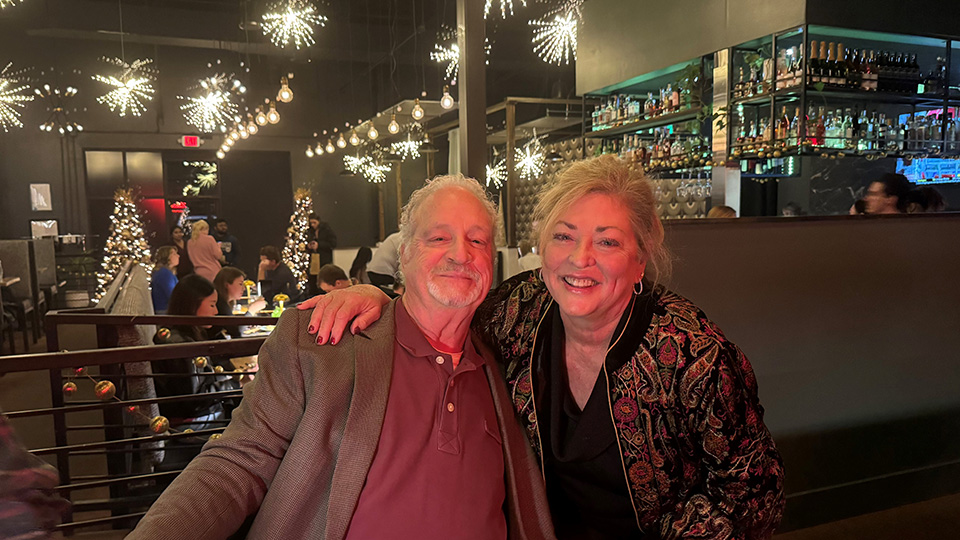
“I am a walking, talking miracle,” exclaims Mary Stack of Oklahoma City after surviving a major stroke. Muhammad Fawad Ishfaq, M.D., is an interventional neurologist at INTEGRIS Health Baptist Medical Center. He concurs with Mary’s claim. “Mary has demonstrated one of the most remarkable recoveries I have ever seen in all my years of treating stroke patients.”
It all started when the then 63-year-old was working in her yard one afternoon. “All of a sudden, I wasn’t able to get my hands and arms to do what I wanted them to do,” she remembers. “Then, the next thing I know I’m on the ground unable to move or even call for help!”
Mary says on any other day, she could have potentially laid there for hours as her husband would have been at work. But on this particular day, he was on his way home to take their dog to the vet. He pulled into their driveway literally minutes after Mary collapsed. “I went into the house and couldn’t find Mary,” says Stan Stack. “I saw her purse on the counter, so I went back outside. That’s when I found her sitting on the lawn. Her face was drooping and she was unable to speak. I knew immediately – she was having a stroke!”
Stan called 911 and Mary was rushed to the hospital and given an NIHSS score of 18. The National Institutes of Health Stroke Scale is a standardized scoring assessment used during a neurological exam to determine the level of impairment caused by a stroke. The higher the score, the more serious the stroke.
“When Mrs. Stack arrived, she was in pretty bad shape,” admits Ashish Masih, M.D., a neurologist with INTEGRIS Health. “We administered a clot busting medication that has the best results when given within three hours of the onset of the stroke. In Mary’s case, we were able to give her the drug within less than hour of her brain attack. The speed in which she got to the hospital and began receiving treatment was no doubt a difference maker. Without the drug, the outcome would have been a lot different.”
Dr. Ishfaq performed a mechanical thromectomy to retrieve the clot that was depriving her brain of oxygen. “Within 16 minutes, we were able to successfully remove the clot from Mary’s brain. The clot itself was five inches long! Less than a minute after the clot retrieval, while she was still on the procedure table, Mary’s NIHSS score returned to the baseline of zero.”
Once awake, Mary was able to move and talk again. She has no residual effects from the stroke. “I was in pilates class on Monday, had my stroke on Tuesday, was released from the hospital on Saturday and then back in pilates class the next Monday! I even went out to celebrate my 64th birthday that night.” She continues, “I’m proof that miracles do happen. God put everything and everyone in the perfect place at the perfect time.”
She is sharing her story this Christmas to give testament to Him, and to encourage others to know the signs and symptoms of stroke and to BEFASTT.
A stroke can happen to anyone, at any time and at any age. But here’s the good news, 80% of strokes are preventable. You can reduce your risk of stroke by addressing these modifiable risk factors:
Click here or call 405-951-2042 to learn more about the stroke services available at INTEGRIS Health.


