


Anthony Harbert of Yukon was 49 years old when his wife of 25 years, LaThea, convinced him it was time to get his very first colonoscopy. He had no symptoms, no pain and no family history of colon cancer, so he went expecting a routine procedure - It was anything but.
 Anthony Harbert of Yukon was 49 years old when his wife of 25 years, LaThea, convinced him it was time to get his very first colonoscopy. He had no symptoms, no pain and no family history of colon cancer, so he went expecting a routine procedure - It was anything but.
The Declaration
In June of 2023, Anthony was diagnosed with advanced stage 4 colon cancer, meaning it had already spread to his liver and other parts of his body. Dom Burneikis, M.D., is a colorectal surgeon with INTEGRIS Health Baptist Medical Center. He delivered the difficult news. “As a surgeon, telling a patient that their colon cancer is not resectable at the moment is never easy. The diagnosis was a shock to Mr. Harbert and his family, but I knew he was motivated to take on treatment right away. I encouraged him to maintain his positive attitude and referred him to my medical oncology colleagues for chemotherapy.”
Anthony admits it was scary at first, but he decided right then and there that he was not ready to die. “I looked Dr. Burneikis dead in the eyes and said, ‘I’m not ready to go. I’m going to live to be 110. I want to see my grandkids grow up.’” It was a declaration that he would repeat over and over again to each of the many doctors who would end up treating him.
The Treatment Plan
Romeo Mandanas, M.D., is a medical oncologist with the INTEGRIS Health Cancer Institute. “We started Anthony on an aggressive treatment plan that would include liquid chemotherapy every two weeks. He had an incredible response to the medication. It would take a year and he would undergo 22 cycles of liquid chemotherapy, but we finally felt that he was ready for surgery.”
Dr. Burneikis would remove 17 inches of his intestine and Vivek Kohli, M.D., the director of transplant and hepatobiliary surgery at the INTEGRIS Health Nazih Zuhdi Transplant Institute would remove a large portion of his liver. “Anthony had a large tumor in his liver that had spread from the colon cancer. The liver lesions were removed by resecting nearly two-thirds of his liver. Unlike other organs, the liver has the unique capability to regenerate, meaning it grows back to its original size following resection. Such resections of the liver must be performed after careful considerations, as underlying diseases can have a negative impact.”
In November 2024, Anthony was told his cancer was gone and he was officially in remission. “I feel good,” he proclaims. “If you have a great team around you, anything is possible. I had the A Team of doctors. Each one of them brought something different to the table and helped me in different ways.”
Dr. Burneikis says you can never underestimate teamwork and the power of positivity. "Anthony’s case illustrates that patients with advanced disease can have excellent outcomes with the right team behind them. I am grateful to have been able to contribute my small part in his journey - but it’s his family, his faith and his unrelenting positive outlook that most definitely propelled him through treatment and recovery.”
The Power of Positivity
Anthony has this advice for anyone currently battling cancer. “Stay busy, stay active, don’t think about it. If all you do is worry about your cancer, then your body will react to that.”
He continues, “Don’t let anyone tell you it’s not going to be ok. Everybody’s story is different. We all know people who have succumbed to cancer, but each circumstance is different. I knew in my heart of hearts that I was going to be ok.”
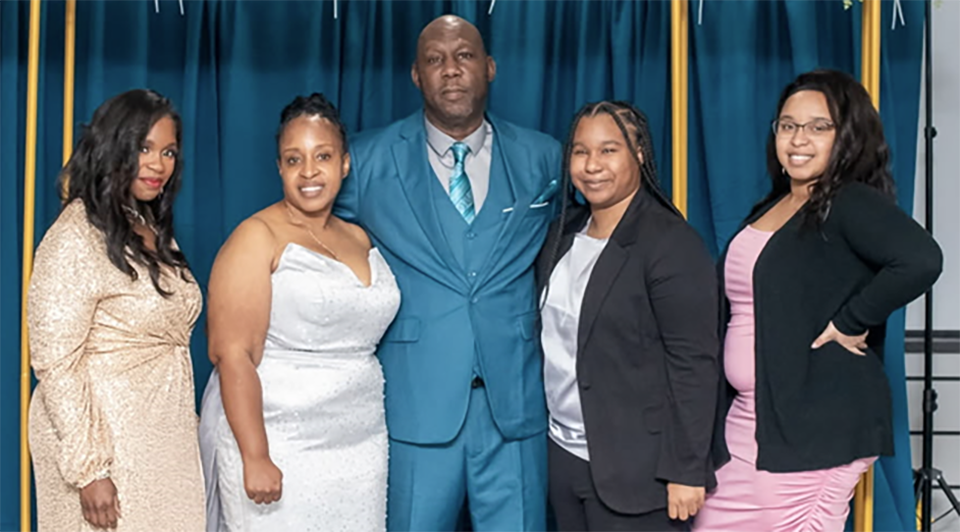
Pictured from left to right: Nashala, LaThea (wife), Anthony, Ariyah and Tallyce
He credits faith, his family and his best friend, Jeremy, for getting him through. He is now looking forward to a future full of memories made with his wife, his three grown daughters and his six grandbabies.
Medical guidelines now suggest getting your first colonoscopy at age 45, which is younger than the previous recommendation of age 50. If you have a family history of the disease, then you should start screening at age 40 or 10 years prior to the age your family member was diagnosed, whichever comes first. To schedule a colonoscopy today, talk to your primary care provider or click here.

Early detection makes all the difference when it comes to colorectal cancer. Contact your primary care physician and ask for a referral to a gastrointestinal doctor or a colorectal surgeon for a colonoscopy.


