


Caple Spence, M.D., a board-certified neurosurgeon with INTEGRIS Health Baptist Medical Center, recently performed the first cranial biopsy in Oklahoma using Stryker’s new Q Guidance System with Cranial Guidance Software.
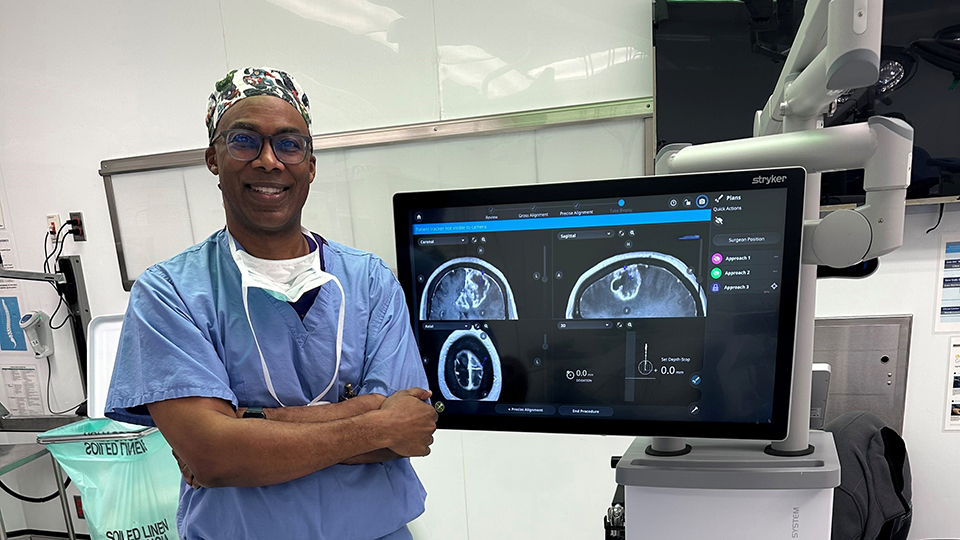
Caple Spence, M.D., a board-certified neurosurgeon with INTEGRIS Health Baptist Medical Center, recently performed the first cranial biopsy in Oklahoma using Stryker’s new Q Guidance System with Cranial Guidance Software.
The margin of error when performing a biopsy on the brain is razor thin, but modern, computerized systems like this are making neurosurgery more accurate and safer than ever before.
“Even a few millimeters of difference when inserting a needle into the brain to remove a tissue sample for biopsy can result in patient injury or death,” says Spence. “This cutting edge technology is a huge benefit for our patients and our ability to provide cranial biopsies with the highest degree of accuracy and safety.”
The Stryker Q Guidance System now being used at INTEGRIS Health Baptist Medical Center is the first and only such tech being used to perform cranial biopsies in the state. The procedure helps doctors diagnose issues like brain disorders, tumors, infections and inflammation.
INTEGRIS Health is at the forefront of using technology to assist our caregivers in providing health care to Oklahomans. To read more about the spine and neurological surgery team at INTEGRIS Health, please click here.


