


Exceptional academic and experiential training, built on a comprehensive model of Family Medicine.
The Great Plains Family Medicine Residency Program provides exceptional academic and experiential training to uniquely qualify well-rounded family physicians to meet the needs of a changing healthcare environment based on a comprehensive model of Family Medicine.
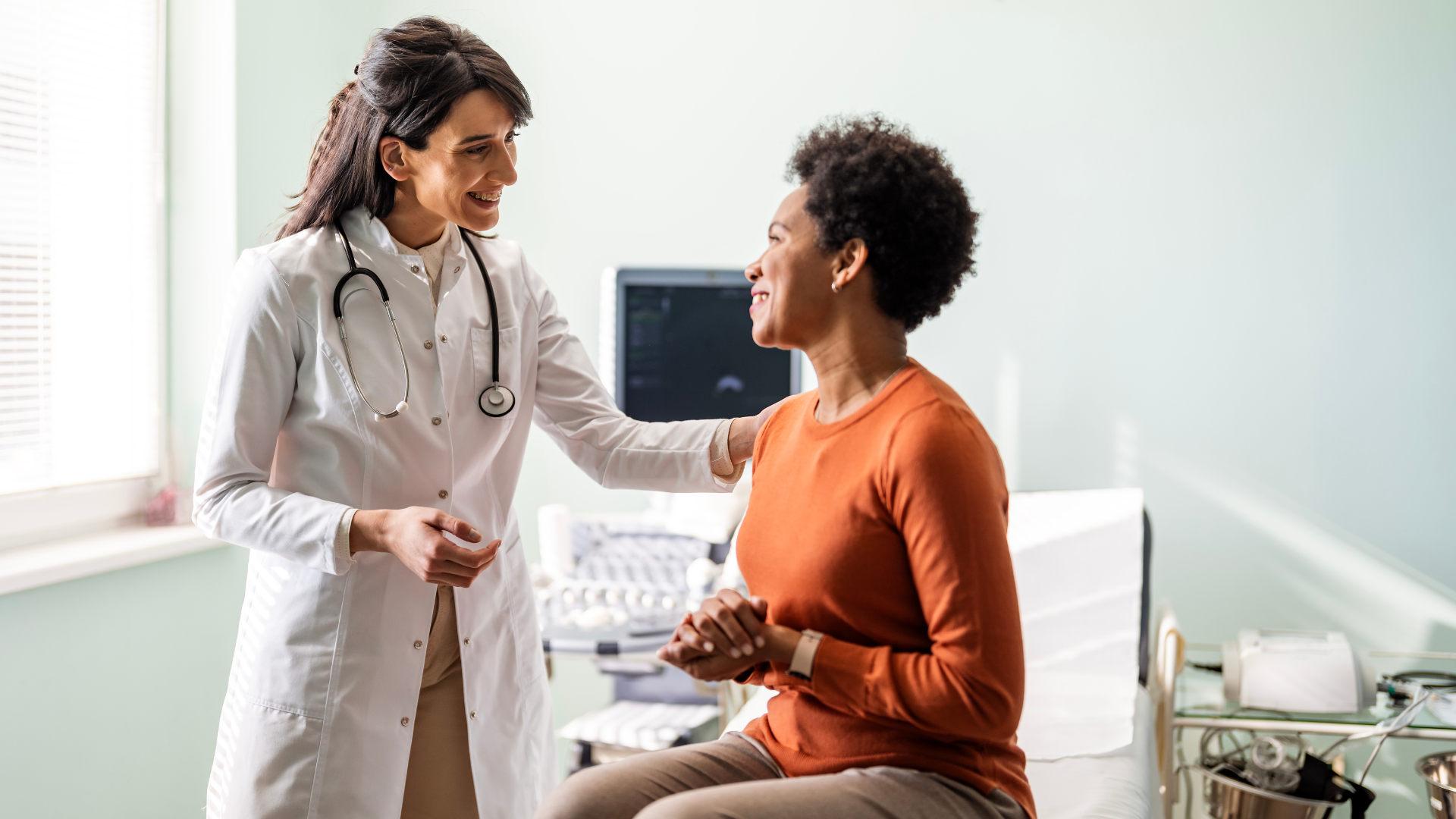
Through our association with INTEGRIS Health Baptist Medical Center campuses, five residents a year prepare for their future in a community-based learning experience supported by a talented faculty, the latest technology and exposure to a broad spectrum of evidence-based family medicine, from birth to geriatrics. Great Plains supports a biopsychosocial approach to patient care, emphasizing the importance of treating the whole person while recognizing the unique contributions of family medicine physicians to all size communities, rural and urban.


 Our history
Two of Oklahoma City’s major hospitals, INTEGRIS Health Baptist Medical Center and INTEGRIS Health Baptist Medical Center Portland Avenue Hospital, recognized the need for training family physicians in the community setting.
This need was answered in July 1994 when the Great Plains Medical Foundation was created for the purpose of sponsoring a family medicine residency program. The Great Plains Family Medicine Residency Program was accredited by ACGME in 1995 and residents began training shortly there after.
Initially, the program trained four residents per year. In 1999 the program expanded to five resident slots in each year.
Great Plains Medical Foundation is a community based residency program with an academic affiliation with the Department of Family and Preventive Medicine at the University of Oklahoma Health Sciences Center.
Our mission
Our mission is to educate and prepare family physicians for a lifetime of independent learning and for the provision of highly competent, effective and compassionate healthcare in order to improve the health of the people of Oklahoma and of the nation.
We nurture our residents' commitment to their own development as individuals, family members, professionals, and leaders. We are committed to providing patients with a personal medical home where they receive timely, evidence-based and comprehensive healthcare, tailored to their needs and provided in a manner that respects them and their families.
Our specialty
Family medicine is the medical specialty which provides first contact, person-focused, comprehensive, coordinated and continuing healthcare for the individual and the family. The specialty uses biopsychosocial and relationship-centered approaches to improving the health of people in the communities we serve.
Our educational philosophy
Just as family medicine seeks to humanize and tailor healthcare to the needs of patients, our faculty appreciates the unique qualities and goals that each resident brings to the program and tailors the educational experience for each learner.
Our stable, experienced, and diverse faculty has an established record of graduating well-rounded physicians who practice successfully in highly diverse settings - urban, suburban, and rural.
Our commitment to preparing residents for practice begins with assessing their goals, strengths, and needs during meetings with their personal advising teams, composed of a physician and behavioral scientist. These teams meet with residents regularly throughout their three years of training to collaborate on strategies for achieving residents' objectives.
Our educational practices
Through a day-long, all-resident retreat, a dedicated first year Balint group, and twice-monthly resident and resident/faculty meetings, we encourage resident input into education. We empower residents to achieve their goals.
We use a web-based evaluation system which allows residents to provide timely feedback on rotations from any Internet connection. Residents will be able to check on their own progress in achieving procedural competence and completing rotations, as well as receive real-time feedback from peers and educators.
We offer strong obstetric training, including surgical obstetrics taught by family physicians. Longitudinal geriatrics and behavioral medicine curricula give residents knowledge and skills to provide excellent end of life care and to integrate mental health and substance abuse care into primary care services.
Work environment
Daily life in the program is characterized by social interaction during daily noon conferences. We enjoy frequent social events such as a Halloween costume competition, a fall chili cook-off and more formal occasions during the holidays and around graduation. Residents, faculty and staff find reasons to celebrate on a regular basis.
Our family medicine center
INTEGRIS Health Medical Group Great Plains, located at 3500 NW 56th Street, is a 13,035 square foot state-of-the-art facility that includes examination and procedure rooms, a conference room and faculty and resident offices.
In 2018 we had 14,343 patient visits, ranging from newborn babies to folks over 100 years old, coming in for well child visits, physicals, prenatal care and management of a variety of acute and chronic medical problems. Our team, including physicians, nurses, front office staff and other healthcare professionals, work together to provide excellent care for our patients.
Our training sites
Residents train in many environments, including INTEGRIS Health Baptist Medical Center, INTEGRIS Health Baptist Medical Center Portland Avenue, INTEGRIS Health Southwest Medical Center, Epworth Villa Continuing Care Retirement Community and Nursing Home, public schools, our family medicine center, free clinics and many specialists' offices.
Our rotations follow a monthly schedule. Most programs follow the same general template for rotations, but there are a few ways that our rotations may differ from others’. Our family medicine service (FMS) is supervised completely by family physicians, including our own faculty members and several community physicians, which helps bring the residents multiple perspectives on inpatient care.
Our pediatrics rotation is not set up as a month each of newborn, inpatient, and outpatient; rather each month has the resident rounding on newborns and inpatients in the morning, then spending the rest of the day seeing outpatients with a general pediatrician and several pediatric subspecialists. The residents deliver babies (including cesarean sections) under the supervision of family physicians with excellent obstetricians available for consultation when needed. The specialty rotations are spent with private physicians who are highly committed to teaching our residents, but who practice in “real life” environments.
For the rotations listed below, time is expressed in number of months:
Second and third year residents each do one month of night float. The night float resident is responsible for admissions to the obstetric, adult inpatient, and pediatric services. The resident also answers after-hours phone calls regarding patients at the clinic, nursing home, and inpatient services. The shifts are 7:00 p.m. to 7:00 a.m., Sunday through Thursday. The night float resident then has their clinic on Friday mornings following their final shift of the week. The night float resident is exempt from weekend call while on night float.
As we have 10 upper level residents, two months out of the year are divided q10 (on average) in order to evenly distribute the call schedule.
There are two intern call shifts each week. One intern covers Friday 7:00 p.m. to Saturday 7:00 a.m. and Saturday 7:00 p.m. to Sunday 7:00 a.m.. This resident rounds on the OB and Newborn services on Saturday and Sunday mornings after their shift, and the Pediatric service on Sunday mornings. A second intern covers Saturday 7:00 a.m. to 7:00 p.m. and Sunday 7:00 a.m. to 7:00 p.m.. That resident rounds on the adult inpatient service on those days.
Their other responsibilities are similar to the Night Float, except that nursing home calls are handled by the upper level resident. Interns on call work directly with our attending physicians, as well as the many consultants available to the program.
There are two upper level call shifts each week. These residents assist and supervise the interns on call, answer nursing home calls, and round on the pediatric service on Saturday mornings. One shift is Friday 7:00 a.m. to Saturday 7:00 p.m.. The other is Saturday 7:00 p.m. to Sunday 7:00 p.m. This averages out to about one shift per month for each upper level resident, leaving the other weekends free for time with family and friends or for moonlighting opportunities.
Comfortable call rooms are provided for both interns and upper levels on call. Each is equipped with an Internet-connected computer, television, mini-fridge, microwave oven, and other amenities.


