


A spinal cord injury (SCI) is damage to the spinal cord—the bundle of nerves and nerve fibers that sends and receives signals from the brain. The spinal cord extends from the lower part of the brain down through the lower back.
Direct injury to the spinal cord itself or damage to the tissue and bones (vertebrae) that surround the spinal cord can cause SCI. This damage can cause temporary or permanent changes in feeling, movement, strength and body functions below the point where the injury happens. Spinal cord injuries are commonly classified as:
SCI rehabilitation is a comprehensive process aimed at improving the physical, emotional and psychological well-being of individuals.
At INTEGRIS Health Jim Thorpe Rehabilitation, a multidisciplinary team collaborates to provide specialized care that supports patients in regaining independence and enhancing their quality of life.
 Initial Care and Medical Stabilization
The first phase of rehabilitation focuses on medical stabilization, wound healing and preventing complications. Our health care team monitors vital signs, manages pain, addresses respiratory issues and ensures proper skin care to prevent pressure ulcers.
Physical and Occupational Therapy
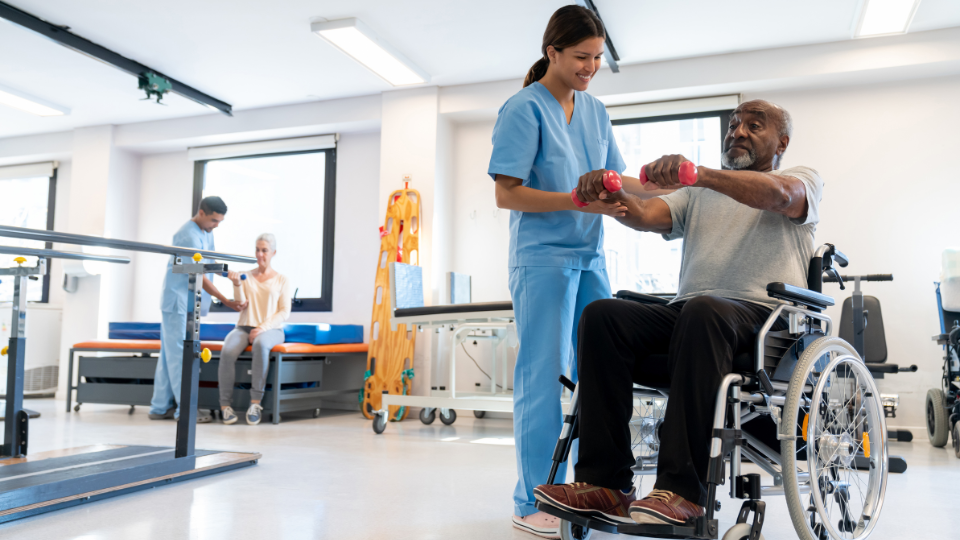
As the patient stabilizes, physical and occupational therapy begin. Our therapies focus on strengthening muscles, improving mobility and training for daily activities such as dressing, grooming and transferring between surfaces. Wheelchair training and assistive devices use are introduced as needed.
Bowel, Bladder and Sexual Health Management
SCI often affects bowel, bladder and sexual function. Our rehabilitation team provides education and develops individualized management programs to help patients adapt to these changes and maintain independence.
Psychological Support and Coping Strategies
Throughout rehabilitation, we provide emotional support through individual counseling. Patients learn coping strategies to manage the emotional challenges of SCI, address body image concerns, and adjust to their new lifestyle.
Family and Caregiver Education
Training for family members and caregivers is crucial. Our education sessions focus on helping families understand the challenges of spinal cord injury, how to best support and assist the patient, and how to adapt the home environment for a safe and comfortable transition.
Community Reintegration and Vocational Rehabilitation
Preparing for discharge may include training for independent living, vocational counseling and assistance in returning to work or school. Adaptive technologies, home modifications and transportation options are explored to maximize independence.
Support Groups and Education
National Spinal Cord Injury Association (NSCIA)
Christopher and Dana Reeve Foundation
The Christopher and Dana Reeve Foundation offers grants, research funding and peer support for people living with SCI.
Paralyzed Veterans of America (PVA)
The PVA supports veterans with spinal cord injuries through advocacy, rehabilitation programs and employment services.
Financial Assistance Programs
Organizations such as the Christopher and Dana Reeve Foundation, the Craig H. Nielsen Foundation, Disabled World and government programs offer grants for medical equipment, home modifications and assistive technologies.
Research and Clinical Trials
Educational Resources and Advocacy